Establish the product basis first
Write pipe or tube—never the convenient hybrid “pipe/tube.” Follow it with standard and edition, exact material designation, welded route, dimensions and governing code. ASTM A312/A312M covers named routes for austenitic stainless pipe; ASTM A554 addresses welded stainless mechanical tubing. A polished outside surface does not erase that boundary.
Use the welded tube versus pipe guide when the noun is uncertain. The ASTM A554 tube page is the better route when mechanical tubing, rather than pipe, is the approved basis.
Only after the product basis is settled should the team discuss heat treatment. Otherwise a correct phrase may be attached to the wrong specification.
State the required delivered condition
Lift the delivered condition from the approved design and product specification, including the edition. Shop shorthand is fine for conversation; it is risky when it drops part of a formal designation.
The product specification may set different heat-treatment requirements by grade or route. Invoke that source instead of typing a familiar furnace temperature from memory. Project additions get their own document and revision.
On the returned quote, look for a plain read-back of the offered condition. “As per standard” is not enough when the enquiry cites more than one standard or edition.
Identify where treatment sits in the route
Sequence matters. Consider a pipe that is welded, heat treated, sized and then heavily worked again. A certificate that merely lists all four operations does not show which condition reached the buyer.
Ask only for the route detail needed to answer that question. Was treatment after welding? Did later cold work alter the specified condition? Will a repaired area or fabricated assembly follow another approved procedure?
Do not demand proprietary furnace details without a review purpose. The useful question is whether the delivered condition complies with the cited product and project requirements and whether later operations can disturb it.
The manufacturing and testing guide helps map these checkpoints. Use it to place heat treatment in the order sequence, not to assume a specific YUHUA process.

Separate material condition from surface appearance
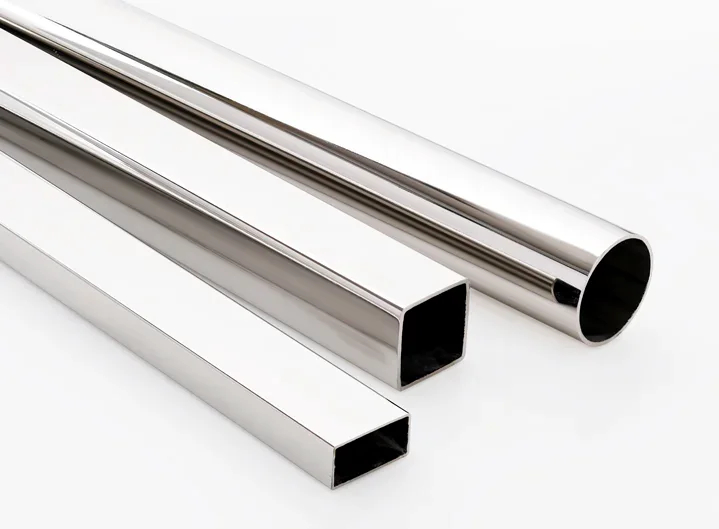
A treated surface may later be descaled, pickled, blasted, polished or cleaned. Those operations answer a different question. If appearance or cleanliness matters, give it a separate line and inspection basis.
Heat tint, oxide and handling marks can matter after welding or later fabrication. The project authority should define the required post-fabrication treatment and acceptance. Do not infer internal condition from a bright external photograph.
World Stainless publishes fabrication guidance that gives useful background on welding, cleaning and surface restoration. It is educational support, not the purchase order’s acceptance specification.
Ask for evidence that connects to the item
A furnace chart without item identity is not enough. A certificate with only a broad sales description is not enough either. Define the record package and how identifiers connect the document to the ordered and delivered product.
Depending on the governing requirements, the package may include a material record, heat-treatment statement, time-temperature chart, batch or load identity, test results and a release record. Request only what the project needs. More pages do not create stronger traceability.
State whether the buyer or third party must review anything before shipment. If approval is a hold point, name the owner and expected response. A supplier cannot plan around “documents for approval” when the timing and scope are missing.
Keep temperature numbers under source control
Old purchase orders make seductive templates. Resist the temperature field until someone checks the current, approved source for this material and route. A number detached from its source, units and edition looks authoritative while doing real damage.
If the PO must reproduce a range, copy it from the licensed standard or approved project document and preserve its units. Rounded Celsius and Fahrenheit conversions are not interchangeable acceptance limits.
When a supplier proposes an alternative, require the technical basis and keep it on a separate line. Engineering or the designated materials authority approves the deviation; procurement records its commercial effect.
Link heat treatment with testing and inspection
The production and test sequence should agree. State whether required mechanical, corrosion, dimensional, hydrostatic or nondestructive examinations occur in the condition specified by the governing documents.
The weld seam inspection guide shows how to define method, coverage, stage and acceptance. Apply the same discipline here. A test result has meaning only when the item, condition, procedure and acceptance reference are visible.
If repair is permitted, identify how repaired areas are treated and re-examined. Keep the original result, disposition and retest together. “Repaired and passed” without location or item identity cannot support a later review.
Compare quotations on one technical baseline
Create columns for standard and edition, grade, welded route, size, wall, delivered condition, treatment stage, surface condition, tests, records, marking, packing and deviations. Ask each bidder to complete them.
Compare technical scope before price. One quotation may include an order-specific heat-treatment record; another may offer only a generic material certificate. One may preserve the requested route; another may substitute a different product. Those are scope differences, not discounts.
Once the technical rows align, compare lead-time basis, freight, payment and validity. Current timing is a commercial fact for the actual order and should never be inferred from this guide.
Put a review block on the purchase order
The block can be concise:
Have a reviewer who did not write the RFQ read it aloud. If that person cannot identify the required condition and proof, the supplier probably cannot either.
- product form, standard and edition;
- grade, welded route, dimensions and quantity;
- required delivered condition;
- treatment stage and any later cold work;
- surface and cleaning requirements;
- applicable tests and their sequence;
- item, batch and load traceability;
- required records and approval points;
- repair and re-treatment route; and
- deviations shown separately.
Technical references
Questions buyers ask
Does “solution annealed” complete the purchase description?
No. Add product standard and edition, grade, route, dimensions, required condition, treatment stage, surface requirements, tests and records. The governing specification supplies the technical basis.
Should the RFQ specify an exact furnace cycle?
Only when an approved specification or project document requires it. Buyers should not invent temperatures or hold times from secondary articles. Cite the controlled source and let qualified authorities review deviations.
Is a generic certificate enough evidence?
Not when order-specific traceability is required. Define how the record links to the item, batch or load and which treatment and test fields the reviewer must see.
Does heat treatment prove the pipe is fit for service?
No single production step proves fitness. Product standard, grade, dimensions, route, condition, testing, fabrication, code design and project approval work together.